The old publishing modelcreates files, not lasting reader relationships
Current publishing systems are built to distribute files through marketplaces, surrendering the relationship between authors and readers.
Problem
Books are packaged as files and handed to marketplaces that own discovery, customer access and most of the data.
Why it fails
The sale ends the relationship. The author gets distribution, but the platform keeps the audience.
Whatauthors lose today
The dominant publishing model gives authors distribution, but takes away the relationship.
Audience ownership
You sell books. The platform owns the customer.
Reader relationships
You rarely know who your readers are, what they finish, what they discuss or what brings them back.
Community
Discussion happens somewhere else, disconnected from your book and your author presence.
Economics
High commissions and marketplace dependency reduce author control.
Context
Reader reactions disappear into reviews, star ratings and external social feeds.
The solution:WePub builds direct web presence
WePub treats a book as a web publication that can be read, found, discussed and connected to the author over time.
Web-native book pages
Each title can live as a readable web asset, not only as a downloadable package.
Author-centered publishing
The author's presence stays connected to the work and to the people reading it.
Reader connection
Discussion and activity remain attached to books and authors after publication.
What changes when you publish on ReaderPub
Old publishing path
Prepare a file
Upload to a marketplace
Let the platform own discovery and customer access
Watch reader activity disappear after purchase
ReaderPub path
Create an active browser-based publication
Build an author-centered web presence
Keep reader relationships connected
Support discussion and future work around the book
What you get
Everything you need to publish, monetize, and grow a direct audience.
A fast web edition readers can open instantly.
Direct sales to connected readers.
Low 5% commission on sales.
Fan clubs for every book and author.
Analytics for sales and engagement.
Optional production-ready EPUB output.
How publishing works
A simple workflow from manuscript to live web edition.
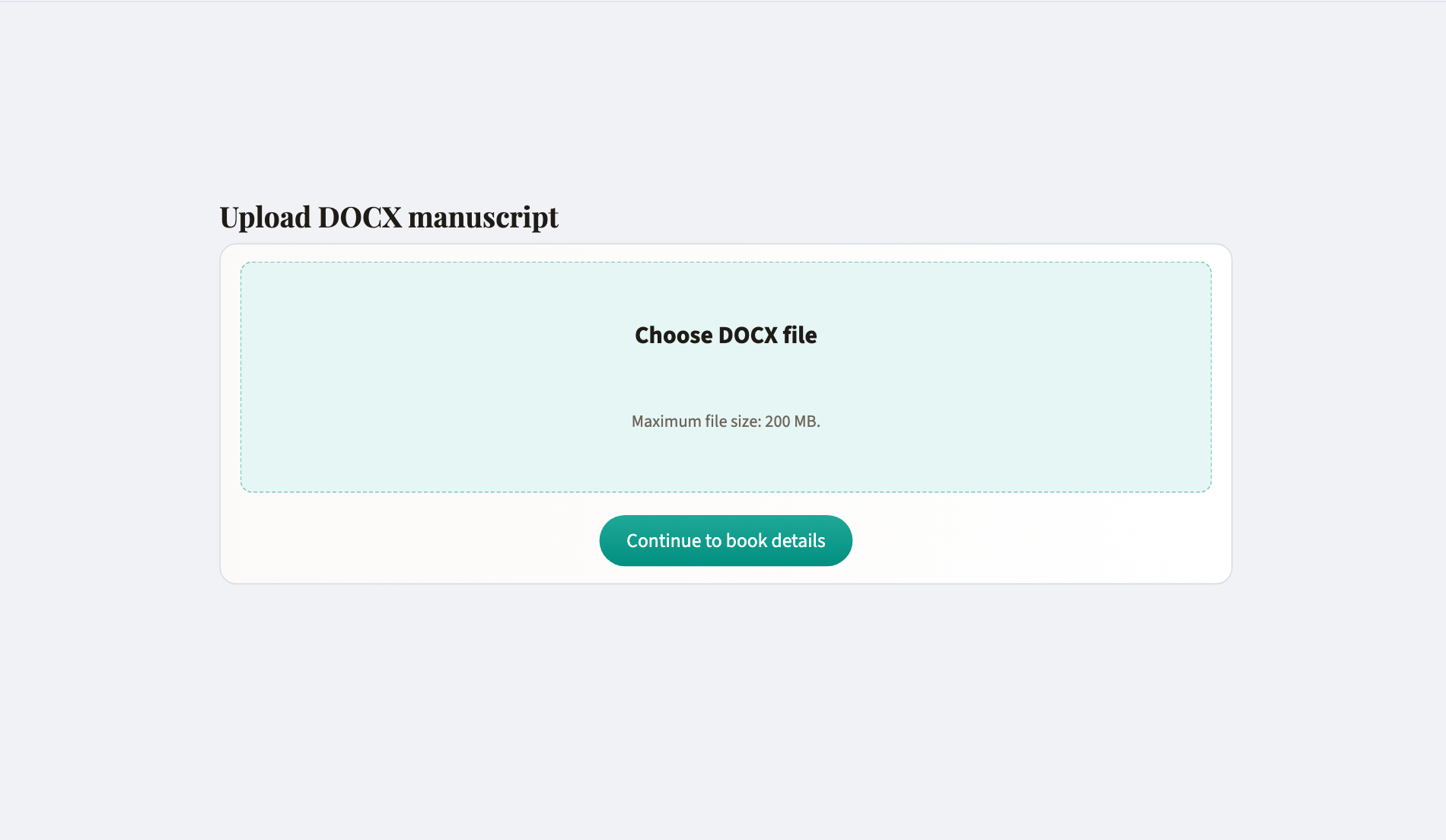
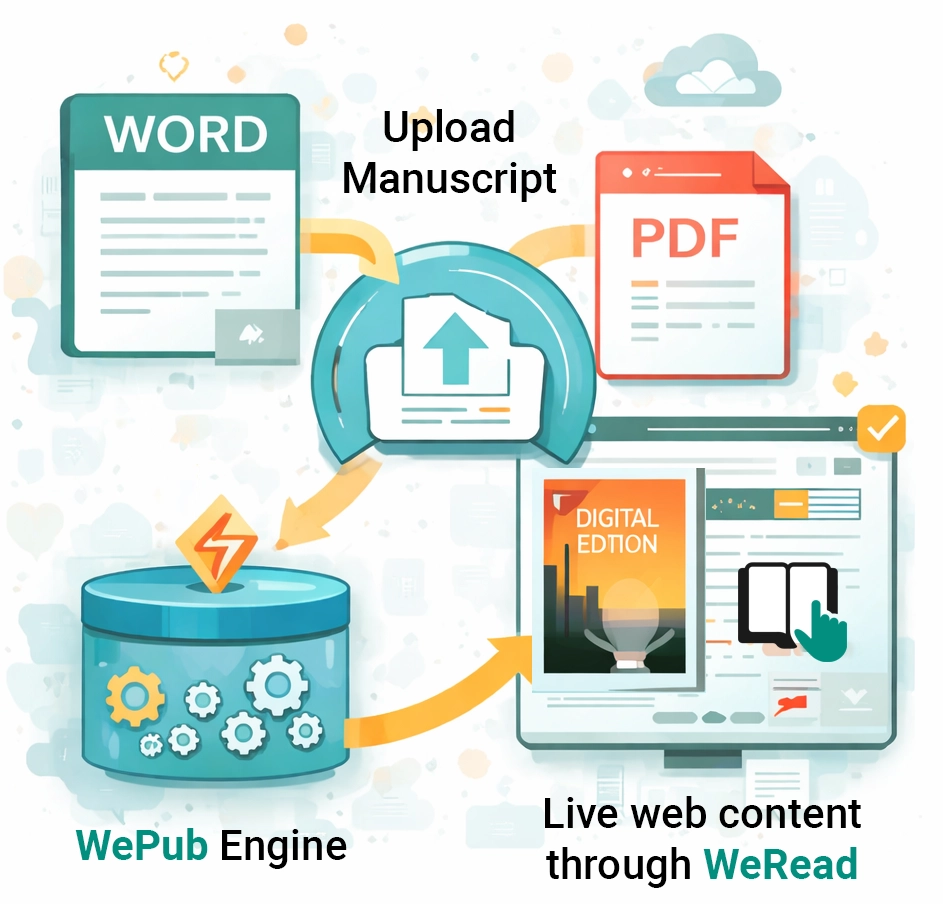
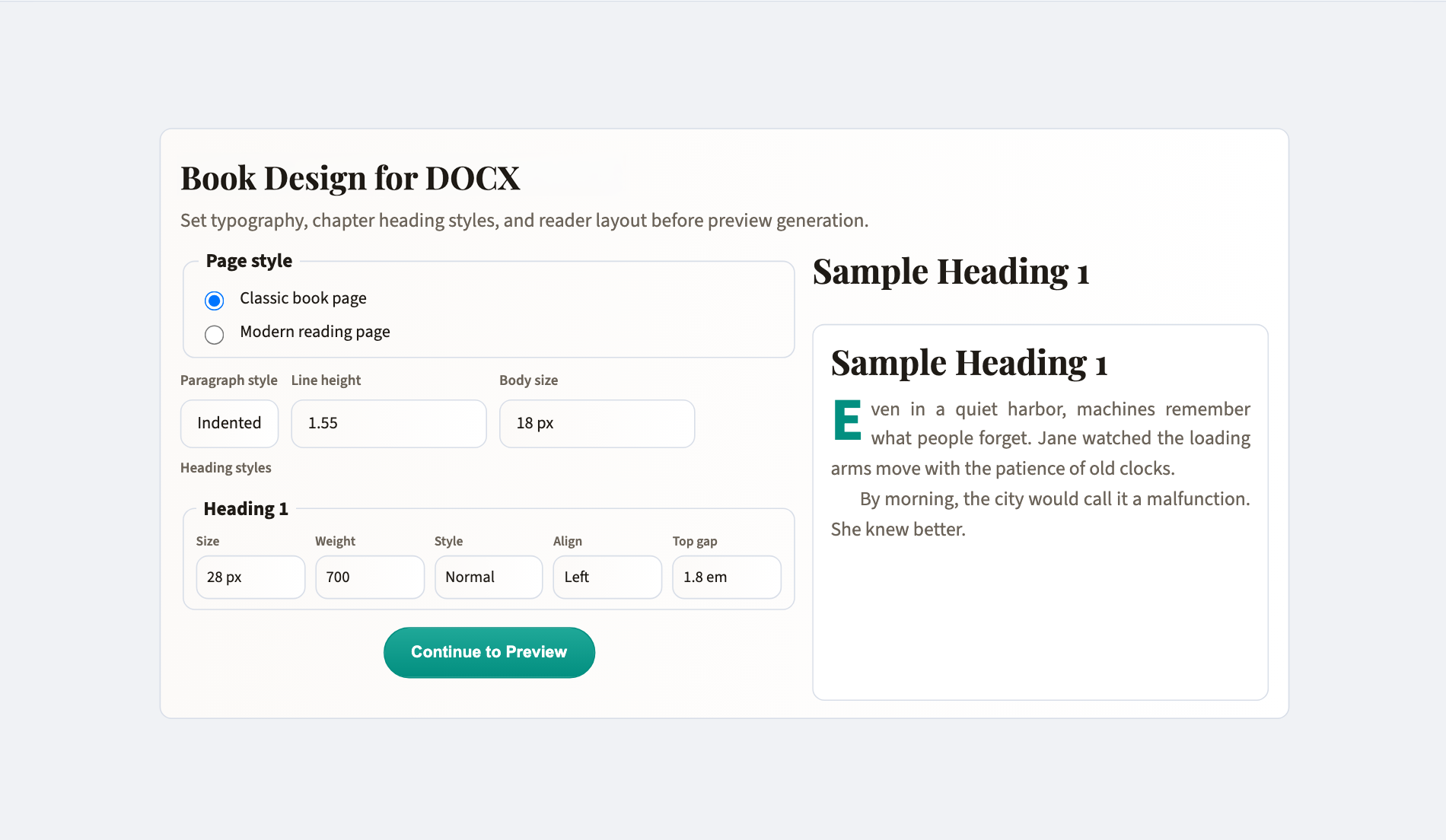
Share your manuscript (Word, or EPUB).
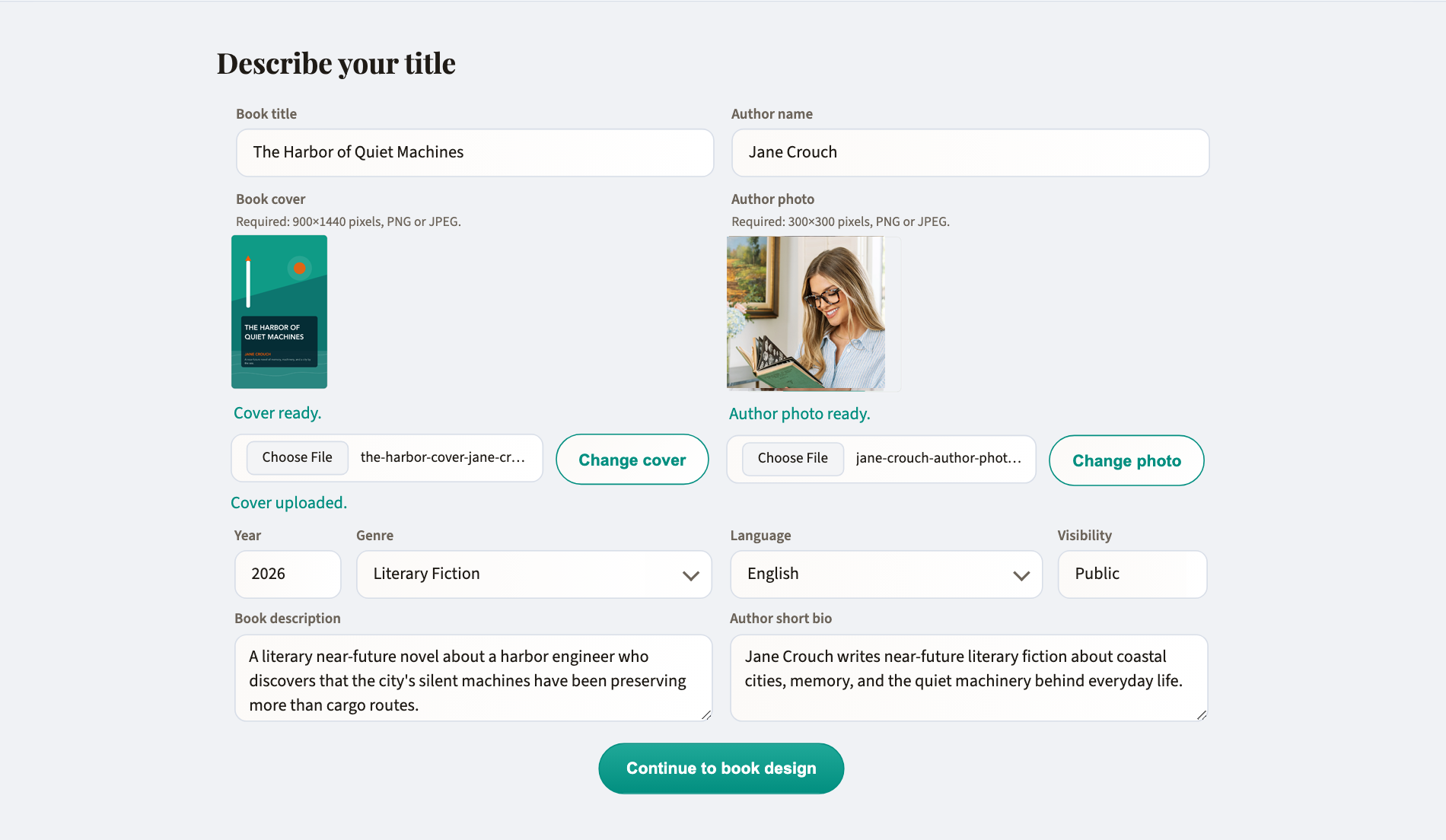
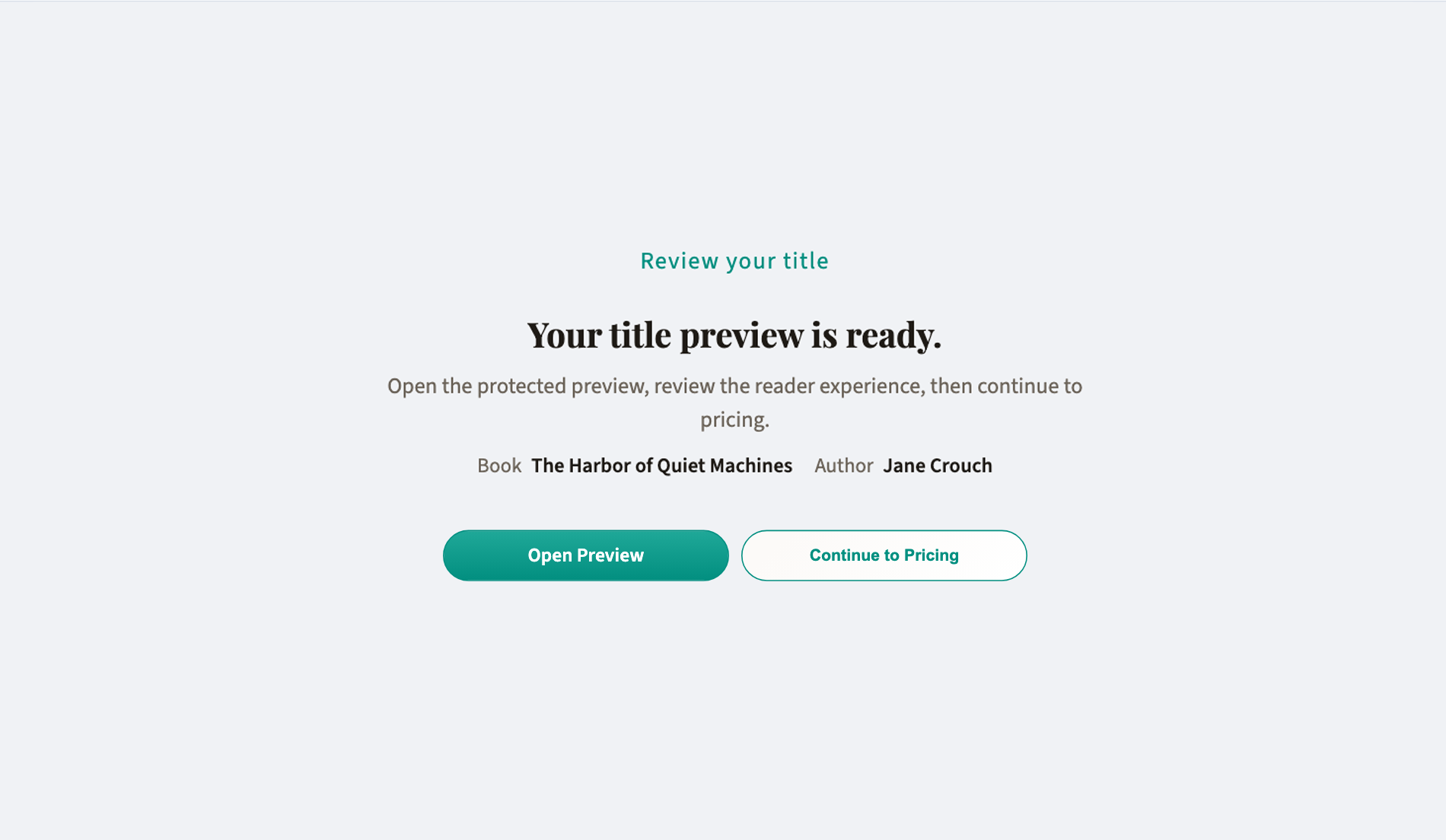
We prepare your web edition and metadata.
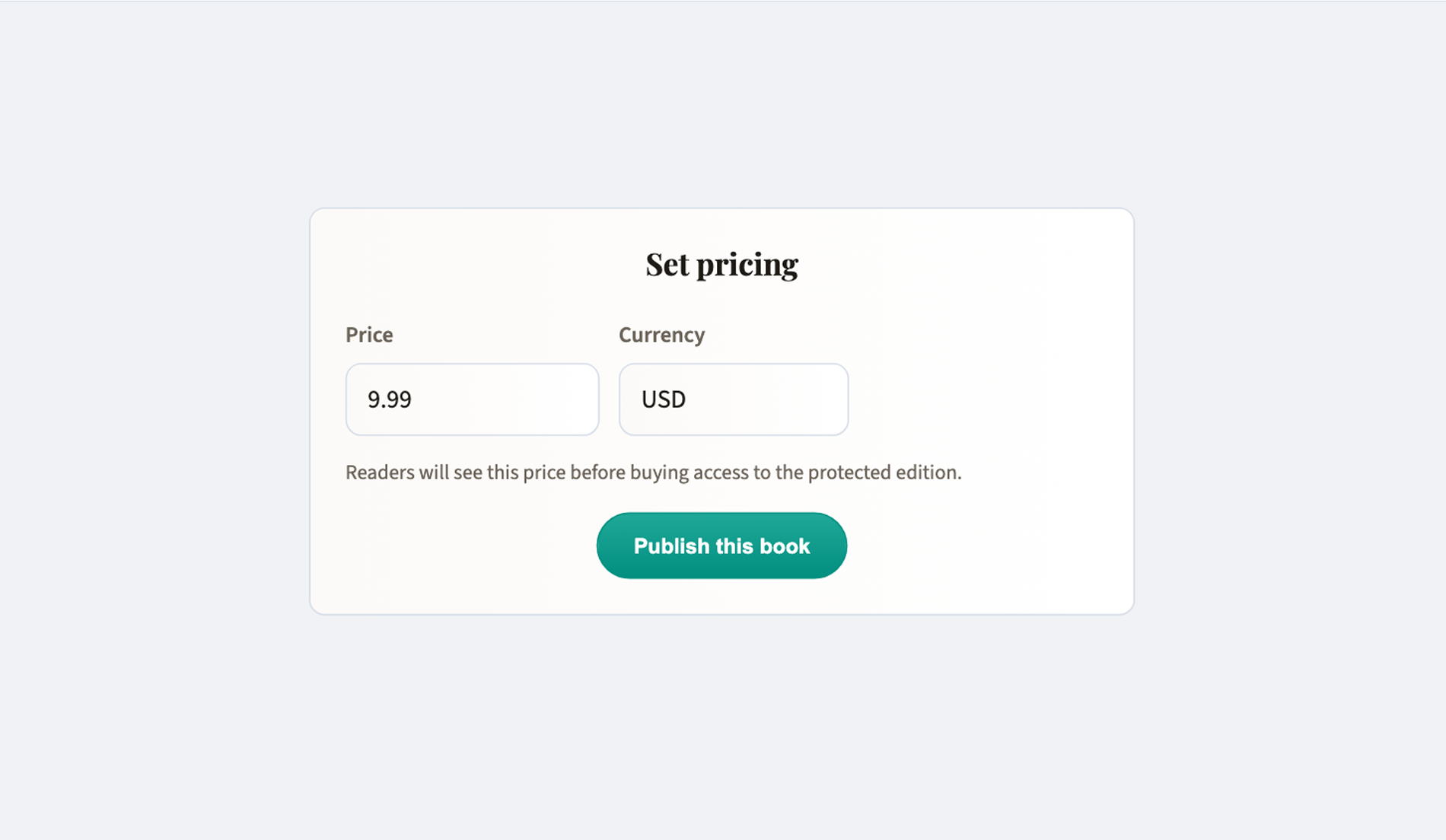
You define sales and fan-club options.
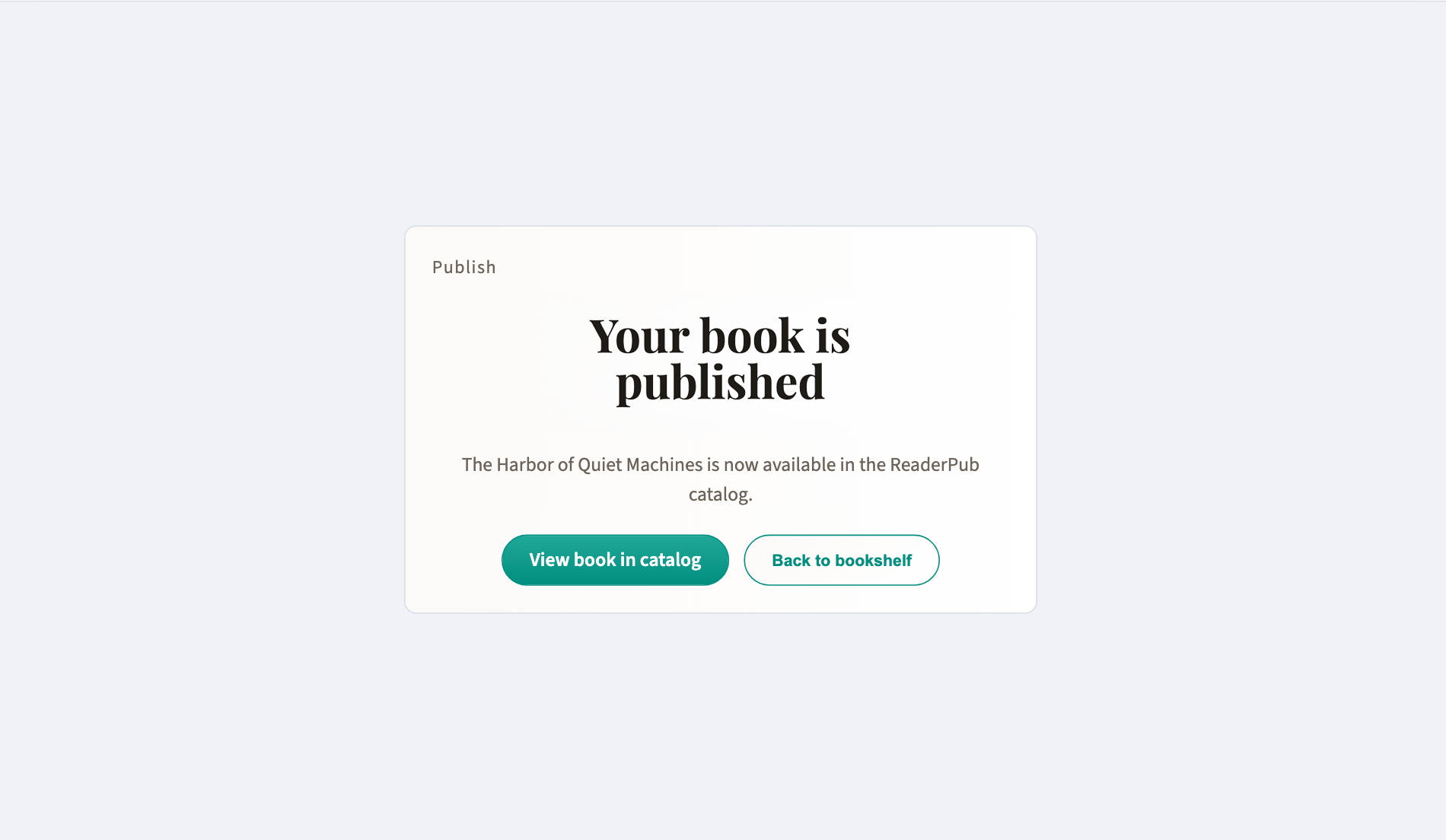
Your book goes live — with analytics from day one.
Compatible with WeRead for web reading and BookTree for organizing sources.
ReaderPub changes the author model
Marketplace publishing
High commission
Platform owns the customer
Reviews replace conversation
Discovery is controlled by marketplace algorithms
Readers leave after purchase
ReaderPub publishing
5% platform commission
Author-centered web presence
Reader relationships stay connected
Discussion stays attached to books and authors
Books remain active after publication
From one-time sale to living audience
ReaderPub turns every book into a long‑term web asset — easy to read, easy to find, easy to discuss, and always connected to future work.
Monetize your catalog
Publish on the web - with optional EPUB output when you need it.
Direct sales
Bundles and promotions (optional)
Fan clubs and memberships
Web edition plus optional production-ready EPUB delivery.
Save on 5% commission versus Amazon's 35%. Use your freed-up resources to promote your books on ReaderPub.
Sell directly and communicate with your readers.
Keep your audience, keep your data, and keep more of each sale.
Sell web editions and ebooks directly on ReaderPub.
5% sales commission, far below Amazon's take.
See sales and reader engagement analytics in one place.
Receive context-rich reader notes attached to exact passages - not generic comments.
Author benefits
Everything you need to publish, manage, and grow your work.
Organize sources, annotations, and drafts in one place.
Publish to a public audience or private collaborators.
Build authority with transparent references and updates.
Keep work structured across projects and editions.
Make your research legible
Show readers where ideas come from and where they lead.
Show sources, references, and context alongside your texts.
Present evolving ideas transparently, not as static PDFs.
Invite readers, collaborators, and institutions into your work.
Turn research and writing into a readable public record.
Writing and publishing companion
Scribe gives authors a focused AI companion for developing ideas, shaping drafts, comparing publishing options, planning launches, and clarifying ReaderPub workflows across writing, editing, and long-term audience work.
Better economics, stronger connections, longer-lasting value
Lower commission
ReaderPub uses a 5% platform commission for direct sales.
Better reader connection
Reader relationships stay connected to the author instead of disappearing into a marketplace account.
Longer book lifecycle
Books remain active as web assets through discovery, discussion and future author activity.
Publishing infrastructure built for the web
WePub combines secure publishing, browser delivery, direct sales and audience visibility inside a single publishing workflow.
Web-native publishing
Publish books as web destinations rather than isolated downloads.
Reader visibility
Maintain visibility into publication activity after release.
Anti-piracy
Protect access through obfuscated web delivery.
Direct sales
Build direct commercial relationships with readers.
EPUB generation
Generate EPUB editions whenever external distribution requires them.
Long-term engagement
Keep publications connected to readers after launch.
From digital files to living web assets
A web-native publication continues generating discovery, engagement and discussion after release. It remains part of an ongoing relationship rather than becoming a completed transaction.
Visibility
Reader activity remains visible.
Engagement
Discussion continues after publication.
Discovery
New readers continue finding the work.
Continuity
Publications remain active over time.
ReaderPub helps publishers transform books and knowledge publications into living web assets that remain active after release.
Readers
Continue engaging with the publication.
Authors
Maintain stronger reader relationships.
Publishers
Gain visibility beyond the moment of sale.
Institutions
Publish knowledge that remains discoverable and useful over time.
Stop renting your audience.
Publish browser-readable books that remain discoverable, discussable and connected to readers long after release.